Long meetings indoors rarely build real trust or spark meaningful change among teams. For HR managers and team development directors across the United Kingdom, the challenge is clear: how do you encourage authentic collaboration that lasts beyond a single event? Outdoor team building offers structured group exercises conducted in outdoor settings that boost communication, reveal new strengths, and create a shared sense of purpose. Discover how these practical strategies can reshape your company culture and truly engage your employees.
Table of Contents
- Defining Outdoor Team Building Activities
- Types Of Outdoor Team Building Programmes
- Key Advantages For Workplace Performance
- Enhancing Wellbeing And Team Morale
- Critical Planning, Safety And Inclusivity Factors
- Common Mistakes To Avoid In Outdoor Team Events
Key Takeaways
| Point | Details |
|---|---|
| Structured Outdoor Activities | Outdoor team building is focused on enhancing team dynamics, communication, and problem-solving through intentional group exercises in natural settings. |
| Variety of Programmes | Different programme types cater to specific team needs, from cooperation games to multi-day retreats, allowing for tailored solutions to organisational challenges. |
| Impact on Performance | Participation leads to improved collaboration, productivity, and employee retention, ultimately enhancing overall workplace effectiveness. |
| Planning and Inclusivity | Thorough planning that prioritises safety and inclusivity is essential to maximise engagement and ensure all team members benefit from the experience. |
Defining Outdoor Team Building Activities
Outdoor team building activities are far more than just a day out in the fresh air. They are structured group exercises conducted in outdoor settings specifically designed to strengthen team dynamics, boost communication, and solve real workplace problems. Think of them as concentrated opportunities where your team tackles challenges together whilst surrounded by nature, away from the usual office distractions. These activities create space for genuine interaction, trust-building, and the kind of authentic collaboration that’s difficult to manufacture indoors.
What makes outdoor team building distinct from other group activities is its deliberate focus on outcomes. Structured collaborative challenges involve cooperative games and exercises that require genuine teamwork, creativity, and mutual trust to succeed. Unlike standard training sessions aimed purely at efficiency, outdoor team building prioritises solving team problems, clarifying roles, and aligning goals through physical and social challenges. For example, a team might work together to construct a structure with limited materials, navigate a course requiring collective problem-solving, or participate in relay activities that demand seamless communication. These aren’t arbitrary games. Each activity carries purpose. The goal is to expose interpersonal issues in a safe, constructive environment where teams can address them directly.
The activities themselves vary considerably depending on your team’s needs and environment. Some focus on creative thinking and idea generation, others emphasise playful competition that shifts negative perspectives to positive ones. Many activities incorporate mission statement creations, where teams develop unified goals that guide future collaboration. Whether your team is dispersed across departments or newly formed, outdoor settings provide something the office cannot: a level playing field where hierarchies soften and people interact differently. A senior manager carrying supplies alongside a junior team member creates natural connection points. The physical engagement required—climbing, building, moving, problem-solving together—activates different parts of the brain than a typical office interaction would. You’re not just talking about teamwork. You’re living it.
When selecting outdoor team building activities for your organisation, consider what specific outcomes matter most. Do you need to improve cross-departmental communication? Build trust amongst a new team? Develop leadership skills? The structure of outdoor activities also offers retreats and high-engagement tasks that genuinely foster motivation, ownership, and a shared sense of success. Because participants achieve something tangible together—completing a challenge, reaching a goal, overcoming an obstacle—they experience what success feels like as a unit. This is precisely why outdoor team building differs so fundamentally from conventional meetings. It creates memories. It builds bonds. It delivers measurable improvements in team performance and employee engagement.
Pro tip: When planning outdoor activities, select venues that naturally suit your team’s fitness levels and interests rather than forcing one-size-fits-all activities; this ensures participation feels genuinely enjoyable rather than obligatory, which directly strengthens engagement outcomes.
Types Of Outdoor Team Building Programmes
Outdoor team building programmes come in many shapes and sizes, each designed to address different organisational needs and team dynamics. The variety available means you can select activities that genuinely resonate with your team’s specific challenges and goals. Some programmes focus on immediate engagement through single-day events, whilst others span multiple days and build progressively towards deeper connections. Understanding what each type offers helps you make an informed decision that delivers real results for your team.
One of the most popular categories includes cooperation games and problem-solving challenges that encourage healthy competition whilst building cohesion. These programmes might involve teams constructing containers to catch dropped items, completing non-verbal communication exercises, or working through scenarios that demand innovative thinking. The beauty of these activities lies in their flexibility. A team struggling with cross-departmental communication might tackle a challenge requiring absolute reliance on instructions from colleagues unable to see the task. Another team might focus on creative problem-solving where they must use limited resources inventively to achieve a goal. Problem-solving and team cooperation exercises actively encourage participants to reflect on personal and team challenges, shifting perspectives from negative to positive and fostering ethical communication throughout the process.
Another significant category encompasses multi-day retreats and nature-based programmes that blend leadership development with immersive experiences. These programmes often include camping, hiking, or other outdoor pursuits combined with structured facilitation and team challenges. Unlike single-afternoon activities, multi-day experiences allow teams to build trust gradually through shared experiences, meals, and evening reflections. Participants develop confidence in unfamiliar environments, and the extended timeframe permits deeper conversations about team dynamics. Leadership development training forms the backbone of many of these programmes, addressing specific gaps in your team’s capability. For instance, if your organisation struggles with decision-making velocity or conflict resolution, a targeted programme can address these directly. The structured leadership development and community building approach embedded in extended programmes creates opportunities for social and leadership growth that single-day events struggle to match.
There’s also the mixed-activity format, which combines multiple types of challenges into one programme. A typical day might include a morning problem-solving challenge, an afternoon physical activity requiring teamwork like navigating an obstacle course, and an evening reflection session where teams discuss what they learned about themselves and each other. This approach works particularly well for larger organisations with diverse teams, as you can tailor different activities to different groups within the same event. Some organisations pair these with multi-activity day experiences that create natural energy and enthusiasm throughout.
When selecting a programme type, consider your team’s current state. Are relationships already strong, or do you need to build trust from the ground up? Is your team geographically dispersed, or can they easily gather for extended periods? What specific skills or mindsets need development? A newly formed leadership team might benefit from an intensive multi-day retreat focused on shared vision and decision-making. A long-established team wanting to refresh engagement might thrive with quarterly half-day activities mixing competition with reflection. The programmes that succeed are those that align with your actual objectives rather than simply ticking a box.
Pro tip: Select a programme that includes post-event facilitation or reflection sessions, as this anchors the learning and prevents the gains from fading once your team returns to regular work.
Here’s a summary of the main types of outdoor team building programmes and their unique attributes:
| Programme Type | Focus Area | Typical Duration | Unique Benefit |
|---|---|---|---|
| Cooperation Games | Communication & trust | 1 day | Encourages collaboration |
| Problem-Solving Challenges | Creativity & resourcefulness | Half to full day | Develops innovative thinking |
| Multi-Day Retreats | Leadership & relationship building | 2+ days | Fosters deep connections |
| Mixed-Activity Format | Diverse team objectives | One day | Engages varied participants |
Key Advantages For Workplace Performance
Outdoor team building delivers tangible improvements to workplace performance that go far beyond the immediate experience of a day spent together outdoors. When teams participate in structured outdoor activities, something shifts in how they function back at the office. The benefits compound over time, creating a performance uplift that ripples through projects, meetings, and daily interactions. Understanding exactly what improvements you can expect helps justify the investment and keeps your team’s focus on what truly matters.
The most significant advantage centres on enhanced collaboration and collective capability. Teams engaged in outdoor activities develop mutual accountability, improve communication patterns, and learn to blend complementary skills in ways that exceed what any individual could achieve alone. This isn’t abstract theory. It manifests in real outcomes. When a team member knows they can rely on colleagues because they have literally depended on each other to complete physical challenges, trust becomes concrete rather than aspirational. The positive impacts of teamwork training on communication and coordination translate directly into faster decision-making, fewer miscommunications, and more efficient project delivery. A marketing team that built genuine trust through outdoor activities will collaborate more openly on campaign strategies. A product development team will share ideas more freely when they know their colleagues have their back.
Productivity and creative problem-solving receive measurable boosts as well. When teams experience that collective working fosters collaboration and expands individual outputs, they naturally begin approaching workplace challenges differently. The synergy created through shared experience motivates consistent high-level performance across projects. Teams stop working in parallel and start working in true coordination. A software development team might find that sprint velocity increases because they’re now proactively communicating blockers rather than discovering them in reviews. Customer service teams often report improved service quality because they’re thinking about problems collectively rather than individually. The creativity that emerges from diverse minds working together produces better solutions than any single department member could generate alone.
There’s also a measurable impact on employee retention and satisfaction. People stay in organisations where they feel genuinely connected to their colleagues. Outdoor team building removes the artificial constraints of the office environment and lets authentic relationships develop. When an HR manager mentions struggling with a specific challenge, and a finance colleague remembers how that manager supported them during an outdoor activity challenge, helping becomes instinctive rather than obligatory. This human connection translates into reduced turnover, which saves considerable recruitment and training costs.
From an organisational effectiveness standpoint, these improvements compound. Better communication reduces errors and rework. Increased trust accelerates decision-making. Improved morale decreases absenteeism. Enhanced problem-solving capability helps teams adapt faster to changing conditions. Over a fiscal year, the ROI from outdoor team building becomes increasingly clear when you measure against baseline metrics like project delivery times, customer satisfaction scores, or internal promotion rates.
Pro tip: Measure performance metrics specific to your team’s challenges before and after the outdoor programme, such as project completion times, communication incident frequency, or internal survey scores, so you can quantify the actual impact rather than relying on anecdotal observations.
Enhancing Wellbeing And Team Morale
Wellbeing and morale sit at the heart of every high-performing team, yet many organisations struggle to create genuine improvements in these areas. Outdoor team building addresses this challenge directly by moving people away from fluorescent-lit offices into environments where natural stress relief happens almost automatically. When your team spends time outdoors together, something shifts psychologically and emotionally. The combination of fresh air, physical activity, natural light, and shared purpose creates conditions where wellbeing naturally flourishes.
The science behind this is straightforward. Exposure to natural environments boosts employee morale, creativity, and overall well-being, reducing stress whilst increasing helpfulness and engagement. Your team members arrive at an outdoor event carrying the weight of deadlines, email overload, and competing priorities. Within hours, something changes. The rhythm slows. Conversations deepen. People laugh more freely. This isn’t frivolous or superficial. The psychological impact is real and measurable. Stress hormones decrease. Mental clarity improves. When people feel genuinely better, they show up differently in their work. The colleague who seemed withdrawn in meetings becomes animated outdoors. The quiet team member speaks up when given space and fresh air. The tension between departments dissolves when people collaborate on something other than budget allocations.
Beyond individual wellbeing, outdoor team building strengthens the social fabric that binds teams together. Team development interventions enhance emotional support, belonging, and social interaction, which are critical to both team morale and individual psychological health. When a team member knows their colleague literally has their back during a challenging physical activity, that trust carries forward into daily work. A software developer remembers that their project manager pushed through discomfort alongside them during a team challenge and finds themselves more willing to push through technical difficulties together. A finance team member recognises that their department mate showed genuine care during a difficult moment outdoors and responds with more patience during stressful quarter-end deadlines. These aren’t large gestures. They’re shifts in how people perceive one another and respond to each other.
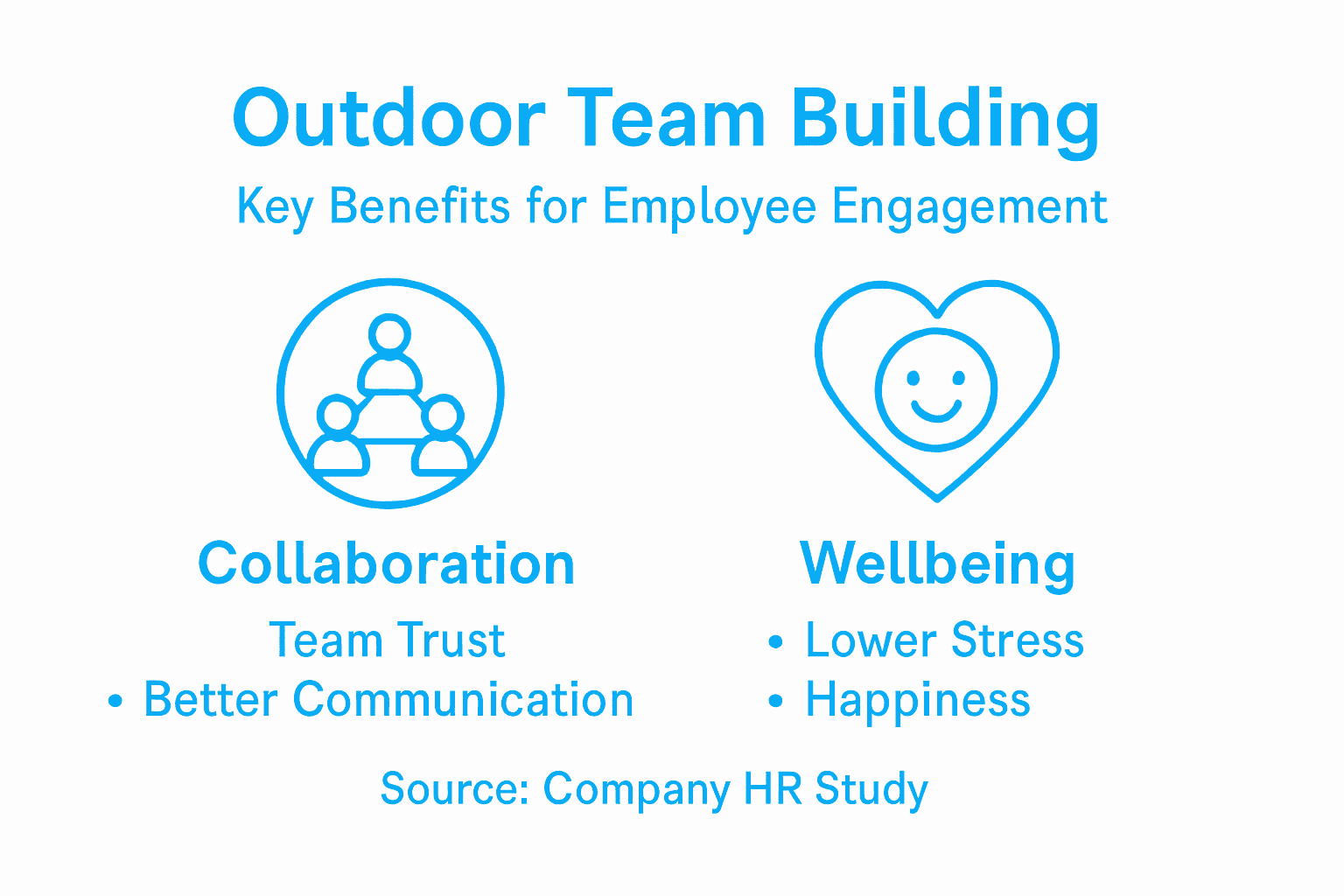
Team morale also improves because outdoor activities create shared positive memories. Unlike a standard team meeting where people sit passively absorbing information, outdoor activities engage people fully. They laugh together. They succeed together. They occasionally fail together and discover that failure isn’t catastrophic. These shared experiences become touchstones that teams reference months later. Someone struggling with a project might remember how the team overcame a similar challenge during an outdoor activity and find renewed confidence. The sense of collective capability grows. People begin to believe that their team can accomplish difficult things, not because a manager told them so, but because they’ve experienced it firsthand.
When you consider the hidden costs of poor morale—absenteeism, presenteeism where people are physically present but mentally checked out, higher turnover, and reduced discretionary effort—the investment in outdoor team building becomes clearly justified. A team with strong morale completes projects faster, with fewer errors, and with greater innovation. People genuinely want to contribute. They communicate more openly about problems before they become crises. They support colleagues without keeping score. They stay in the organisation because they value their relationships and feel valued themselves.
Pro tip: Schedule outdoor team building activities during seasons when weather is most reliably pleasant in your region, and always include indoor backup activities so that unpredictable weather never cancels the event and dents the morale boost you’re trying to create.
Critical Planning, Safety And Inclusivity Factors
Outdoor team building only delivers its promised benefits when you get the fundamentals right. This means thorough planning that addresses safety, risk management, and genuine inclusivity. Skipping these considerations doesn’t just create liability issues. It actively undermines the engagement benefits you’re trying to achieve. A team member who feels unsafe or excluded during an outdoor activity will disengage further, not improve. Similarly, a poorly planned event that leaves people cold, uncomfortable, or stranded damages morale rather than boosting it. Getting this right requires thinking systematically about what could go wrong and deliberately designing to prevent it.
Safety frameworks demand comprehensive attention. Effective outdoor team building necessitates thorough planning encompassing risk and safety management, including climate conditions and emergency preparedness. This goes well beyond casual consideration. You need to assess weather patterns for your chosen season and location. What happens if temperatures drop unexpectedly? What if heavy rain arrives? Do you have shelter? Adequate warm clothing available? Communication systems that work outdoors? Have you identified the nearest medical facilities? Do your activity leaders have first aid training? Have you briefed all participants on what physical demands they’ll face and allowed them to self-select appropriately? Have you identified potential hazards in your chosen venue and mitigated them? A team building activity on a lakeside involves water safety considerations. An activity involving climbing or height involves fall protection. These aren’t optional extras. They’re foundational.
Inclusivity requires equally deliberate attention, and it extends far beyond simply inviting everyone. Inclusivity requires recognising and overcoming historical, cultural, economic, and social barriers that limit participation of underrepresented groups. Some team members may have religious or cultural practices that affect what outdoor activities they can participate in. Others may have disabilities that require specific accommodations. Some may have experienced historical exclusion from outdoor spaces based on their background. Some may simply lack access to the right equipment or clothing and cannot afford to purchase it. Your responsibility extends to actively removing these barriers, not just passively including everyone.
Consider practical inclusivity actions:
- Offer activities with varying physical intensity levels so team members with different fitness levels or disabilities can participate meaningfully
- Provide equipment and clothing rather than assuming people own appropriate gear
- Explicitly invite questions about accessibility needs and act on them without requiring people to justify their needs
- Select venues and activities that genuinely welcome diverse participants rather than defaulting to activities that historically appeal to specific demographics
- Ensure your team leaders reflect the diversity of your team and understand culturally competent facilitation
- Communicate clearly in advance about what to expect, what to bring, and how the day will run so people can mentally prepare and arrange any necessary support
- Budget generously for accessibility accommodations because penny-pinching here directly signals who you actually value
The cost of getting safety and inclusivity wrong extends beyond immediate harm. A team member injured during an outdoor activity creates legal liability and destroys trust in leadership. A team member excluded or made to feel unwelcome during the event leaves even more disengaged than before. Word spreads. Future team building initiatives face scepticism. The goodwill you were hoping to build evaporates. Conversely, an event where everyone feels genuinely safe and included amplifies engagement benefits significantly. People recognise that their employer prioritised their wellbeing and dignity. That recognition builds genuine loyalty.
Pro tip: Conduct a thorough accessibility audit of your proposed venue and activities at least three months before the event, consult directly with team members about their individual needs, and budget for a professional safety officer to be present throughout the activity.
To clarify, here is a comparison of key planning considerations for effective and inclusive outdoor activities:
| Planning Factor | Why It Matters | Common Oversight | Good Practice Example |
|---|---|---|---|
| Safety | Prevents injuries | Ignoring weather risks | Emergency plans, first aid trained |
| Inclusivity | Increases engagement | One-size-fits-all activities | Multi-level options, adaptive gear |
| Communication | Reduces confusion | Vague event instructions | Clear agenda, pre-event briefing |
| Facilitation | Maximises learning | Unskilled leaders | Professional facilitators |
Common Mistakes To Avoid In Outdoor Team Events
Many organisations launch outdoor team building with genuine enthusiasm and solid intentions, only to see the initiative stumble because of preventable mistakes. These aren’t exotic failures. They’re predictable errors that repeat across events when planning doesn’t follow a systematic approach. Understanding what goes wrong helps you protect your investment and ensures your team actually benefits from the experience.
The most common pitfall is insufficient risk assessment. Organisations often rush into activity planning without thoroughly evaluating what could actually go wrong. Common mistakes in outdoor team events include insufficient risk assessment, inadequate emergency planning, and neglecting communication protocols. A team building company might suggest an activity at a beautiful outdoor venue without properly assessing weather exposure, terrain hazards, or proximity to help. An HR manager might assume that because the activity sounds fun, safety will naturally take care of itself. This is backwards thinking. You must identify specific hazards first, then design activities and safety measures around those hazards. Ask yourself: What injuries could realistically occur? What environmental conditions pose risks? What equipment failures might happen? What communication breakdowns could occur? How would you respond to a medical emergency? If you cannot answer these questions confidently, your planning isn’t complete.
Another frequent mistake involves underestimating the complexity of outdoor conditions. Indoor team building happens in controlled environments. Outdoor events don’t. Typical mistakes involve underestimating risks associated with weather, terrain, and group management. A brilliant activity that works perfectly on a dry summer evening might fail entirely if temperatures drop ten degrees or rain arrives unexpectedly. Terrain that seems straightforward to navigate when you’ve surveyed it in daylight becomes treacherous in changing light or weather. A group that functions well in a meeting room can become unwieldy when spread across a larger outdoor space where communication becomes harder. You need contingency plans for multiple weather scenarios. You need backup indoor spaces. You need clear communication systems that work outdoors. You need realistic assessments of how group dynamics actually change in outdoor settings.
Third, organisations frequently fail to communicate expectations clearly. Team members arrive unsure what to wear, what physical demands they’ll face, or what the actual schedule is. This creates anxiety rather than excitement. Some people show up overdressed. Others underdressed. Some prepared themselves physically; others didn’t realise they’d need to. Some expected a relaxed social day; others expected intense competition. This confusion creates frustration rather than engagement. Your communications must be explicit: What time does it start and end? What should people wear? What physical activities will they face? Can they opt out of specific activities? What happens if weather changes? How long will it take to get there? Where exactly is the venue? Is food provided? What should they bring? This clarity removes anxiety and allows people to mentally prepare, which significantly improves their actual experience.
Many events also stumble because they neglect to consider individual needs and accessibility. An activity sounds fun to the event planner, but it excludes team members who have mobility challenges, anxiety disorders, different fitness levels, or cultural practices that affect participation. Rather than discovering this during the event, you should ask directly: Who has accessibility needs? Who wants to participate in modified ways? What equipment or arrangements would help people feel comfortable and safe? Building these accommodations into your planning from the start ensures everyone genuinely participates rather than watching from the sidelines.
Finally, organisations underestimate the importance of quality facilitation and leadership. The activity itself isn’t what creates engagement. How the activity is facilitated does. A skilled facilitator creates psychological safety, manages group dynamics, draws out shy participants, keeps things positive when someone struggles, and helps teams reflect on what they learned. A poor facilitator lets activities happen haphazardly, allows some people to dominate whilst others hide, and misses opportunities to deepen connections. Invest in experienced outdoor facilitators who understand team dynamics, not just activity technicians who know how to set up equipment.
Pro tip: Test your entire event plan with a smaller pilot group or run through scenario planning before executing with your full team, documenting every detail of timing, equipment, communication protocols, and contingency responses.
Unlock the True Power of Outdoor Team Building for Your Workforce
Struggling to translate outdoor team building into lasting employee engagement and improved workplace performance The article highlights the challenges many organisations face such as inadequate planning, lack of inclusivity, and difficulty sustaining morale after events. Your team deserves more than just a day outside. They need purposeful activities that foster trust, creativity, and effective communication tailored to your unique goals. Seriously Cool Events specialises in delivering bespoke team building, away days and corporate hospitality that not only address these challenges but transform your team dynamics for the better.
Discover how our 25 years of expertise can help you create memorable outdoor experiences where every detail matters. Choose Seriously Cool Events to ensure safety, inclusivity and maximum impact through expert facilitation and thoughtfully designed programmes. Act now to turn your next corporate event into a catalyst for stronger collaboration, higher morale and lasting employee engagement. Get started today at Seriously Cool Events. Explore how we tailor solutions that truly align with your team’s needs at Seriously Cool Events. Make your investment count with a trusted partner who understands the critical factors behind successful outdoor team building.
Frequently Asked Questions
What are the main benefits of outdoor team building for employee engagement?
Outdoor team building activities enhance collaboration, communication, and trust among team members, leading to improved employee morale and overall job satisfaction.
How can outdoor team building activities improve workplace performance?
These activities create memorable shared experiences that foster trust and accountability, which translate into more effective teamwork, faster decision-making, and enhanced creative problem-solving in the workplace.
What types of outdoor team building activities are most effective for enhancing employee engagement?
Activities focused on cooperation, problem-solving challenges, and multi-day retreats are particularly effective, as they encourage interaction and build deeper relationships among team members.
How do outdoor team building activities contribute to employee wellbeing?
Spending time outdoors reduces stress and enhances mental clarity, creating a positive psychological shift that leads to improved wellbeing and increased engagement at work.